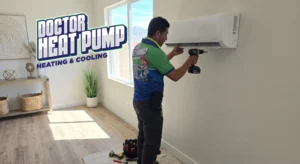


Are you struggling to decide between cooling systems for your Las Vegas home? The ducted vs ductless heat pump debate is one of the most common questions we hear at Doctor Heat Pump. Choosing the wrong system can cost you thousands in energy bills and repairs. Additionally, Las Vegas’s extreme desert climate makes this decision even more critical for your family’s comfort.
Understanding Heat Pump Systems in Las Vegas
Las Vegas homeowners face unique challenges with our scorching summers and mild winters. Therefore, understanding how different heat pump systems work is essential for making the right choice.
What Are Ducted Heat Pumps?
Ducted heat pumps use your home’s existing ductwork to distribute conditioned air throughout your space. These systems connect to a central indoor unit that pushes air through ducts to different rooms.
| Feature | Ducted Heat Pumps |
|---|---|
| Installation | Uses existing ductwork |
| Coverage | Whole-home cooling/heating |
| Visibility | Hidden indoor components |
| Control | Single thermostat control |
What Are Ductless Heat Pumps?
Ducted vs ductless heat pump systems differ significantly in design. Ductless systems, also called mini-splits, use individual indoor units mounted on walls or ceilings. Each unit connects directly to an outdoor compressor.
| Feature | Ductless Heat Pumps |
|---|---|
| Installation | No ductwork required |
| Coverage | Zone-based cooling/heating |
| Visibility | Visible wall-mounted units |
| Control | Individual unit controls |
Ducted vs Ductless Heat Pump: Cost Analysis
Initial Installation Costs
The ducted vs ductless heat pump cost comparison depends on your home’s current setup.
Ducted Systems:
- Lower installation cost if ducts exist
- $3,000-$8,000 for typical Las Vegas homes
- May require duct modifications for efficiency
Ductless Systems:
- $2,000-$5,000 per indoor unit
- Multiple units needed for whole-home coverage
- No ductwork modifications required
Operating Costs
Ductless systems typically offer better efficiency in Las Vegas’s climate. Additionally, you can turn off units in unused rooms, saving energy during our hot summers.
Ducted vs Ductless Heat Pump: Efficiency Comparison
Energy Efficiency Ratings
Ductless Advantages:
- Higher SEER ratings (up to 30+ SEER)
- No duct energy losses (20-30% savings)
- Zone control reduces waste
Ducted Advantages:
- Consistent whole-home temperatures
- Better air filtration options
- Works well with existing HVAC zones
For Las Vegas homes, proper heat pump sizing is crucial for both system types. Especially since our extreme temperatures require careful planning for optimal efficiency.
Climate Considerations
Las Vegas’s desert climate affects ducted vs ductless heat pump performance differently:
- Summer Performance: Ductless systems excel in extreme heat
- Winter Performance: Both systems work well in mild winters
- Air Quality: Ducted systems offer better whole-home filtration
Installation and Maintenance: Ducted vs Ductless Heat Pump
Installation Requirements
Ducted Systems Need:
- Existing or new ductwork
- Central air handler space
- Electrical upgrades (sometimes)
- Professional duct sealing
Ductless Systems Need:
- Wall or ceiling mounting space
- Refrigerant line installation
- Drainage solutions
- Multiple indoor units
Maintenance Differences
Both systems require regular maintenance, but the ducted vs ductless heat pump maintenance needs vary:
| Maintenance Task | Ducted | Ductless |
|---|---|---|
| Filter Changes | Quarterly | Monthly |
| Coil Cleaning | Annual | Bi-annual |
| Duct Cleaning | Every 3-5 years | N/A |
| Professional Service | Bi-annual | Annual per unit |
For Las Vegas homeowners, regular heat pump maintenance is essential due to our dusty desert conditions.
Which System Is Right for Your Las Vegas Home?
Choose Ducted Systems If:
- You have existing quality ductwork (visit our homeowner’s guide here for more information on if you can use your existing ductwork)
- You prefer hidden HVAC components
- You want whole-home air filtration
- Your home has open floor plans
Choose Ductless Systems If:
- You lack existing ductwork
- You want maximum energy efficiency
- You prefer zone-based control
- You have specific cooling/heating needs per room
Additionally, many Las Vegas families benefit from heat pump energy-saving tips regardless of which system they choose.
Making Your Decision: Practical Next Steps
The ducted vs ductless heat pump decision ultimately depends on your specific home, budget, and comfort preferences. However, here are immediate steps you can take:
- Assess Your Current Ductwork: Have it inspected for efficiency
- Calculate Your Cooling Zones: Determine how many rooms need climate control
- Consider Your Budget: Factor in both upfront and operating costs
- Evaluate Your Home’s Layout: Open concepts favor ducted, compartmentalized homes favor ductless
Conclusion
Choosing between ducted vs ductless heat pump systems doesn’t have to be overwhelming. Both options can provide excellent comfort and efficiency for Las Vegas homes when properly sized and installed. Furthermore, the right choice depends on your home’s unique characteristics and your family’s comfort priorities.
At Doctor Heat Pump, we’ve helped thousands of Las Vegas families make this important decision. Our experienced team can evaluate your home and recommend the perfect heating and cooling solution for your needs. Don’t let another scorching Las Vegas summer pass with an inefficient cooling system.
Ready to upgrade your home’s comfort? Contact Doctor Heat Pump today for a free consultation and let our Las Vegas heat pump experts help you choose between ducted and ductless systems. Call us now at 702-467-7236 to schedule your assessment!