

Doctor Heat Pump frequently meets Las Vegas homeowners and business owners facing a common challenge: they need efficient heating and cooling, but their building lacks ductwork. Installing traditional central HVAC systems requires cutting into walls and ceilings to run extensive ductwork which is expensive, disruptive, and sometimes impossible in certain structures.
Ductless mini split systems solve this problem elegantly. These innovative heat pump systems provide powerful heating and cooling without requiring ductwork, making them ideal for older Las Vegas homes built before central air became standard, room additions and converted spaces, commercial buildings with unique layouts, and properties where duct installation is impractical or prohibitively expensive.
Understanding how ductless mini splits work, which applications benefit most, and what installation involves helps you determine if this technology fits your situation. For many Las Vegas properties, ductless systems provide the perfect combination of efficiency, flexibility, and cost-effectiveness.
What Is a Ductless Mini Split System?
Ductless mini split systems consist of two main components connected by refrigerant lines rather than air ducts.
The outdoor unit contains the compressor, condenser coil, and other mechanical components which is similar to traditional heat pump outdoor units. This unit sits on a concrete pad outside your building, just like conventional systems.
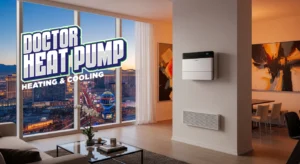
Indoor air handler units mount on walls or ceilings inside conditioned spaces. These compact units contain evaporator coils, fans, and controls that deliver heated or cooled air directly into rooms. Each indoor unit operates independently, allowing customized temperature control for different spaces.
Refrigerant lines just 3 inches in diameter connect outdoor and indoor units through small holes in exterior walls. These lines carry refrigerant between components, eliminating the need for bulky air ducts. A single outdoor unit can serve multiple indoor units (typically 2-5 depending on capacity), creating a multi-zone system where each room maintains independent temperature settings.
The “mini split” name comes from splitting heating and cooling functions between outdoor compressor units and multiple small indoor air handlers, rather than using one large central air handler connected to extensive ductwork.
Buildings and Situations Ideal for Ductless Systems
Ductless mini splits excel in specific applications where traditional ducted systems face challenges or limitations.
Older Homes Without Existing Ductwork
Many Las Vegas homes built before the 1960s lack central air conditioning and ductwork. These homes relied on window units, swamp coolers, or suffered through heat without air conditioning. Adding traditional central HVAC requires cutting into walls, running ducts through attics or crawlspaces, and major renovation work.
Ductless systems provide modern climate control with minimal renovation. Small wall penetrations for refrigerant lines don’t require opening walls or ceilings extensively. Installation completes in 1-2 days rather than weeks of construction, and your home maintains its original architecture without visible ductwork.
For historic Las Vegas properties or architecturally significant homes where preserving original character matters, ductless systems deliver modern comfort without compromising aesthetic integrity.
Room Additions and Converted Spaces
Garages converted to home offices, enclosed patios becoming extra bedrooms, or home additions built without HVAC provisions need climate control. Extending existing ductwork to these spaces often proves impractical due to distance from central systems or structural limitations.
Ductless mini splits provide independent climate control for additions without modifying existing HVAC systems. Each converted space gets its own air handler connected to outdoor unit capacity, operating separately from main home systems.
This independence provides flexibility—cool your home office without running central AC throughout an unoccupied house, or maintain different temperatures in master bedroom additions compared to main living areas.
Multi-Unit Properties and Rentals
Las Vegas investment properties, duplexes, and small apartment buildings benefit from ductless systems’ independent operation. Each unit has separate climate control with individual metering for accurate utility billing.
Ductless systems eliminate tenant disputes over temperature settings common with shared central systems. Each tenant controls their own space, and utility costs directly reflect their usage rather than being split proportionally.
For property owners, independent systems mean one unit’s HVAC problems don’t affect other tenants. Maintenance and repairs happen per unit without disrupting the entire building.
Commercial Buildings with Challenging Layouts
Retail stores with high ceilings, restaurants with varied spaces, office buildings with partition changes, and buildings with limited attic or mechanical space benefit from ductless flexibility.
Traditional commercial ductwork requires significant space for distribution. This is challenging in buildings with concrete ceilings, limited plenum space, or frequent tenant improvements that modify floor plans. Ductless systems adapt easily to layout changes without extensive duct modifications.
Server rooms, conference rooms, and other spaces requiring precise temperature control independent of general building HVAC work perfectly with dedicated ductless units providing exact conditions without affecting other areas.
Workshops, Studios, and Detached Structures
Detached garages, art studios, workshop buildings, and backyard structures need climate control but sit too far from main buildings for practical duct extension. Running ductwork across property requires underground installation or unsightly overhead routing.
Ductless systems connect outdoor and indoor units with refrigerant lines running up to 150 feet, which is adequate for most detached structure applications. Installation involves minimal property disruption compared to extending ductwork across yards or installing separate complete HVAC systems.
These applications particularly benefit from independent operation. Condition your workshop only when you’re working there without running main house HVAC systems unnecessarily.
Multi-Zone Capabilities and Independent Control
One of ductless systems’ most valuable features is true multi-zone operation with independent temperature control for each area.
How Multi-Zone Systems Work
A single outdoor unit supports multiple indoor air handlers (typically 2-5 depending on outdoor unit capacity). Each indoor unit operates independently with its own thermostat, allowing different temperature settings in different rooms or zones.
Your master bedroom might stay cool at 68°F for comfortable sleeping while living areas maintain 74°F. Guest bedrooms remain warmer (or turned off completely) when unoccupied, saving energy without sacrificing comfort in occupied spaces.
This zone-by-zone control eliminates complaints about rooms that are too hot or too cold—each space maintains exactly the temperature occupants prefer.
Energy Savings Through Zoning
Traditional central HVAC systems condition entire homes uniformly, wasting energy cooling or heating unoccupied spaces. Ductless zoning eliminates this waste.
Las Vegas homeowners with ductless systems typically save 20-30% on HVAC energy costs compared to traditional central systems. Conditioning only occupied spaces rather than entire homes creates substantial savings, especially in larger properties or homes with variable occupancy patterns.
Commercial applications see even larger savings. Retail stores can maintain customer-comfort temperatures in sales areas while reducing conditioning in storage or back-office spaces. Restaurants condition dining rooms fully while maintaining different temperatures in kitchens where cooking equipment generates heat.
Adding Zones Over Time
Ductless systems allow phased installation. Start with essential zones, then add capacity later as budget allows or needs change. This flexibility helps manage initial costs while maintaining upgrade capability.
Install bedroom zones first for comfortable sleeping during Las Vegas summer nights. Add living space zones later. Convert a garage to office space years after initial installation by simply adding another air handler to existing outdoor unit capacity.
This flexibility proves particularly valuable for growing businesses or families adapting homes to changing needs over years.
Installation Process and Timeline
Understanding installation requirements helps you plan appropriately and know what to expect from start to finish.
Site Assessment and System Design
Doctor Heat Pump begins every ductless installation with comprehensive site assessment. We evaluate room sizes requiring climate control, existing electrical service capacity, optimal air handler placement for even air distribution, best outdoor unit location considering noise, appearance, and serviceability, and required refrigerant line routing through walls or attic spaces.
This assessment ensures properly-sized equipment and optimal placement before installation begins. Proper sizing prevents inadequate capacity or wasted money on oversized equipment.
Pre-Installation Preparation
Installation requires minimal preparation. We identify final air handler locations on walls or ceilings, confirm electrical panel capacity for new circuits, verify acceptable outdoor unit placement with property owners or HOAs, and obtain any necessary permits (typically straightforward for ductless installations).
Most preparation completes during initial consultation, though we confirm details before installation day to prevent surprises.
Installation Day Process
Ductless installation typically completes in 1-2 days depending on number of zones and building complexity.
Outdoor unit installation happens first. We set the unit on a concrete pad or wall-mounted bracket, install electrical disconnect, and prepare refrigerant line connections.
Indoor air handler installation follows. We mount units on walls or ceilings at predetermined locations, drill 3-inch holes through exterior walls for refrigerant line routing, run and conceal refrigerant lines where possible, and install dedicated electrical circuits for each air handler.
Final connections complete the installation. We connect refrigerant lines between outdoor and indoor units using proper brazing techniques, evacuate lines and charge system with correct refrigerant amount, test all units in both heating and cooling modes, and demonstrate operation and basic maintenance for property owners.
The process creates surprisingly little disruption. Most work happens with minimal impact on occupied spaces, and you’ll have functional climate control the same day installation completes.
Installation Timeline
Single-zone systems (one outdoor unit, one indoor air handler) typically install in 4-6 hours. Two-zone systems require 6-8 hours. Systems with 3-5 zones usually complete in 1-2 full days.
We schedule installations during mild weather when possible, though climate control needs sometimes require installation during extreme temperatures. Our technicians work efficiently to minimize time without heating or cooling.
Energy Efficiency and Operating Costs
Ductless mini split systems rank among the most efficient HVAC technologies available, delivering exceptional energy performance in Las Vegas’s climate.
Superior Efficiency Ratings
Quality ductless systems achieve 18-30 SEER2 cooling efficiency—far exceeding minimum requirements and matching or beating traditional heat pumps’ best ratings. Some premium models reach 30+ SEER2, though 20-25 SEER2 systems provide excellent efficiency at more accessible pricing.
Heating efficiency similarly exceeds traditional systems. Ductless heat pumps achieve 9-12 HSPF2, providing highly efficient heating during Las Vegas winters when our moderate temperatures fall within heat pumps’ optimal operating range.
These high ratings translate directly to lower utility bills. A Las Vegas home spending $1,600 annually on cooling with a 14 SEER2 traditional system might spend just $1,000-$1,100 with a 20-22 SEER2 ductless system—saving $500-$600 yearly.
No Duct Loss Efficiency Advantage
Traditional ducted systems lose 20-40% of heating and cooling energy through duct leakage, poorly insulated ducts in hot attics, and long distribution runs before conditioned air reaches living spaces. These losses waste enormous energy in Las Vegas where attic temperatures exceed 140°F during summer.
Ductless systems eliminate duct losses entirely. Air handlers deliver conditioned air directly into spaces without traveling through hot attics or leaky ductwork. This fundamental efficiency advantage significantly reduces energy consumption compared to ducted systems even with identical equipment efficiency ratings.
For typical Las Vegas homes, eliminating duct losses saves an additional 15-25% beyond equipment efficiency improvements—substantial savings that compound over years.
Variable-Speed Operation
Most ductless systems use inverter-driven variable-speed compressors that adjust capacity continuously rather than cycling on/off repeatedly. This variable operation maintains precise temperatures while consuming less energy.
Traditional on/off systems waste energy with startup surges each cycle and temperature swings when systems turn on and off. Ductless systems’ continuous operation at varying speeds eliminates these inefficiencies while providing steadier comfort.
Cost Breakdown: Equipment and Installation
Understanding ductless system costs helps you budget appropriately and compare options effectively.
Single-Zone System Costs
Single-zone ductless systems (one outdoor unit, one indoor air handler) typically cost $3,500-$6,000 installed for quality equipment. Budget brands may cost less, while premium high-efficiency systems reach the upper end of this range.
This pricing includes equipment, professional installation, electrical work, refrigerant line installation, and warranty registration. For comparison, extending traditional ductwork to add climate control to a single room often costs $2,500-$4,000—not much less than a complete ductless system providing independent control and superior efficiency.
Multi-Zone System Costs
Multi-zone costs depend on number of zones and total capacity required. Typical installations cost:
- Two-zone systems: $6,000-$9,000 installed Three-zone systems: $8,500-$12,000 installed
Four-zone systems: $11,000-$15,000 installed Five-zone systems: $13,500-$18,000 installed
These costs remain competitive with traditional central HVAC installations while providing flexibility and efficiency advantages that ducted systems can’t match.
Cost Comparison to Ductwork Installation
Adding complete ductwork to homes lacking it costs $6,000-$15,000 depending on home size and complexity, plus traditional HVAC equipment costs of $6,000-$12,000—totaling $12,000-$27,000 for complete central AC installation.
Ductless systems typically cost 20-40% less than installing ductwork plus central equipment while providing superior efficiency and zone control. For buildings where duct installation is particularly challenging or expensive, ductless systems offer even greater cost advantages.
Rebates and Incentives
Ductless mini split systems qualify for federal tax credits (up to $2,000 for qualifying high-efficiency models) and NV Energy rebates ($300-$800 depending on efficiency). These incentives reduce net costs by $2,000-$2,800, improving already-favorable economics.
Doctor Heat Pump handles rebate applications, ensuring you receive all available incentives.
Comparison to Traditional Ducted Heat Pump Systems
Understanding differences between ductless and ducted systems helps you choose the best option for your situation.
When Ductless Systems Excel
Ductless systems provide superior value when buildings lack existing ductwork, adding climate control to specific rooms or additions, requiring true independent zone control, renovating where duct installation would be disruptive, or seeking maximum energy efficiency.
Their installation speed, minimal renovation requirements, and elimination of duct losses make ductless systems ideal for these applications.
When Traditional Ducted Systems Make Sense
Homes with existing functional ductwork might prefer traditional systems avoiding replacement costs. New construction where ductwork installation happens during framing may choose ducted systems.
Properties requiring whole-home air filtration beyond what individual ductless units provide, or homeowners preferring hidden HVAC components rather than visible wall-mounted units, might also prefer traditional systems.
Neither option is universally superior—the best choice depends on your building’s characteristics, budget, and priorities.
Performance Comparison
Properly-sized and installed ductless and ducted systems provide comparable heating and cooling performance in Las Vegas conditions. Both handle extreme temperatures effectively when equipment is appropriate for desert climate.
The efficiency advantage goes to ductless systems due to eliminated duct losses, while traditional systems offer whole-home air distribution some prefer. Both deliver reliable year-round comfort when professionally installed and maintained.
Maintenance Requirements and Service
Ductless systems require regular maintenance to maintain efficiency and reliability, though maintenance needs differ somewhat from traditional systems.
Filter Cleaning
Each indoor air handler contains washable filters requiring monthly cleaning during heavy-use seasons. This simple 5-minute task maintains airflow and efficiency while preventing dust buildup.
Unlike traditional systems with single centralized filters, ductless systems need filter attention at each indoor unit—manageable but requiring more attention points.
Professional Annual Service
Professional maintenance annually or bi-annually includes cleaning indoor and outdoor coils, checking refrigerant levels, testing electrical connections, verifying proper operation and temperature output, and inspecting drain lines for clogs.
Doctor Heat Pump offers maintenance plans covering all necessary service for ductless systems, ensuring optimal performance while preserving warranty coverage.
Long-Term Reliability
Quality ductless systems last 15-20 years with proper maintenance—comparable to traditional heat pump lifespans. The simpler design with fewer mechanical components and no ductwork to maintain often results in fewer service calls over equipment lifetimes.
Frequently Asked Questions
Q: Can ductless mini splits handle Las Vegas’s extreme summer heat?
A: Absolutely. Quality ductless systems engineered for desert climates provide excellent cooling even during 115°F days. Doctor Heat Pump installs only systems proven in extreme conditions. Properly-sized ductless systems handle Las Vegas heat as effectively as traditional central AC.
Q: How many rooms can one outdoor unit serve?
A: Most residential outdoor units support 2-5 indoor air handlers depending on total capacity requirements. Larger commercial systems can serve even more zones. The number of zones depends on room sizes, cooling/heating requirements, and outdoor unit capacity selected.
Q: Are wall-mounted indoor units noisy?
A: Quality ductless indoor units operate very quietly—typically 19-25 decibels, quieter than a whisper. You’ll barely notice operation during normal use. Outdoor units produce similar noise to traditional heat pump outdoor units, though premium models include extra sound dampening.
Q: Can I control ductless systems with smartphone apps?
A: Yes, most modern ductless systems include WiFi connectivity and smartphone app control. Adjust temperatures remotely, set schedules, monitor energy usage, and receive maintenance reminders all through convenient apps.
Q: Do ductless systems work for heating during Las Vegas winters?
A: Yes, ductless mini splits are heat pumps providing both heating and cooling. They work excellently during Las Vegas’s mild winters, efficiently heating homes even on our coldest nights. Systems include backup heat for rare occasions when temperatures drop below heat pump operating range.
Making Your Ductless Mini Split Decision
Ductless mini split systems have transformed HVAC possibilities for buildings lacking ductwork. What once required expensive renovation and duct installation now installs in days with minimal disruption and superior efficiency.
For Las Vegas properties where traditional ducted systems are impractical, expensive, or impossible, ductless technology provides the perfect solution. Independent zone control, exceptional efficiency, flexible installation, and reliable performance make ductless systems ideal for countless applications throughout our community.
Whether you’re adding climate control to an older home, conditioning a converted garage office, upgrading rental properties with independent tenant control, or solving unique commercial space challenges, ductless mini splits deserve serious consideration.
Ready to explore whether ductless mini split systems fit your Las Vegas property? Contact Doctor Heat Pump today at 702-467-7236 for a complimentary assessment. We’ll evaluate your specific situation, recommend appropriate systems and configurations, and provide detailed proposals showing costs, savings, and available incentives.
Don’t let lack of ductwork prevent comfortable, efficient climate control. Ductless mini split technology makes modern HVAC accessible for virtually any building. Call Doctor Heat Pump to discover how ductless systems can transform your property’s comfort and efficiency.
References
- U.S. Department of Energy – Ductless Mini-Split Heat Pumps: https://www.energy.gov/energysaver/ductless-mini-split-heat-pumps
- ENERGY STAR – Ductless Heating and Cooling: https://www.energystar.gov/products/ductless_heating_cooling
- U.S. Department of Energy – Heat Pump Systems: https://www.energy.gov/energysaver/heat-pump-systems