

Last updated: November 2026
A heat pump is one of the biggest investments in your home, so it is natural to wonder how long it will last. The honest answer: heat pump lifespan depends less on the brand name on the box and more on how the system was installed, how it is used, and how well it is cared for.
Two homes can buy the same model on the same day. One system wears out in eight years. The other runs well past fifteen. The difference usually comes down to sizing, refrigerant charge, airflow, and maintenance.
This guide covers the average heat pump lifespan by type, which parts wear out first, what shortens a system’s life, the warning signs of a heat pump near the end, and the practical steps that add years to yours.
Quick Answer: What Is the Average Heat Pump Lifespan?
Most air-source heat pumps last 10 to 15 years, and well-installed, well-maintained systems can reach about 20 years. Geothermal heat pumps last longer, with indoor units often lasting 20 to 25 years.
- Typical air-source heat pump: 10 to 15 years
- High-quality, well-maintained system: up to about 20 years
- Undersized, oversized, or neglected system: as little as 8 to 10 years
- Geothermal (ground-source) heat pump: 20 to 25 years for the indoor unit
- Biggest factors: installation quality, correct sizing, climate, and regular maintenance
How Long Does a Heat Pump Last on Average?
The average heat pump lasts about 10 to 15 years. According to Carrier, a typical heat pump lasts 10 to 15 years, and high-quality systems with proper installation and maintenance can often reach 20. Lennox gives the same 10 to 15 year range for air-source heat pumps with proper care.
Where your system lands in that range depends on several things:
- Equipment quality. Carrier notes that premium models often last 15 to 20 years, while budget models typically last 8 to 12.
- Installation. Correct sizing, refrigerant charge, and airflow set the foundation for every year that follows.
- Climate. Hot climates that demand long cooling seasons speed up wear.
- Maintenance. A system that gets regular care almost always outlasts one that doesn’t.
In other words, a heat pump lifespan is a range, not a promise. You have more control over where your system lands than most people realize.
How Long Do Different Types of Heat Pumps Last?
Geothermal heat pumps last the longest, while air-source and ductless systems usually fall in the 10 to 15 year range. Here is how the main types compare.
| Heat Pump Type | Typical Lifespan | What Affects It Most |
|---|---|---|
| Air-source split system | 10 to 15 years, up to about 20 with good care | Outdoor heat and dust, sizing, charge, maintenance |
| Ductless mini split | Similar to air-source systems | Filter and coil cleaning, installation quality |
| Packaged heat pump (rooftop or ground) | Similar to air-source systems | Sun and heat exposure, roof access for maintenance |
| Geothermal (ground-source) | 20 to 25 years for the indoor unit | Loop design, installation, water quality |
| Water-source (high-rise buildings) | Varies by building | Condition of the building’s water loop and regular service |
Lennox explains that geothermal systems can last 20 to 25 years because underground temperatures are more stable than outdoor air. If you are weighing the two, see our comparison of geothermal vs. air-source heat pumps. High-rise owners can learn more in our complete guide to water-source heat pumps.
Why Does a Heat Pump Wear Out Faster Than a Furnace?
A heat pump usually wears out faster than a furnace because it works year-round, heating in winter and cooling in summer. A furnace rests all summer. A standalone air conditioner rests all winter. A heat pump does both jobs with the same compressor, fans, and controls.
Lennox puts it in perspective: a standard furnace might last 15 to 20 years, while a central air conditioner typically lasts 12 to 15 years. A heat pump lands in a similar range to an air conditioner even though it runs in both seasons, which speaks to how durable modern equipment is.
That extra run time is also why maintenance matters so much. Every season of heating and cooling adds wear, and small problems compound faster than they would in a system that sits idle half the year.
How Does the Las Vegas Climate Affect Heat Pump Lifespan?
The Las Vegas climate tends to push heat pump lifespan toward the shorter end of the range unless the system is well maintained. Carrier notes that hot climates requiring heavy cooling can speed up wear, and few places cool harder than Southern Nevada.
Here is what Las Vegas heat pumps face:
- Long cooling seasons. Systems can run most of the day from late spring into fall.
- Extreme peaks. On triple-digit afternoons, the outdoor unit works against air well over 100°F.
- Desert dust. Dust clogs filters and coats outdoor coils, which forces the compressor to work harder.
- Rooftop installations. Units on roofs sit in direct sun and are often harder to reach for regular cleaning.
- Cool winter nights. Your heat pump also handles heating and defrost cycles on cold mornings.
The good news: a properly sized, correctly charged, and regularly cleaned heat pump can still deliver a long service life here. For a closer look at local conditions, read how long a heat pump should last in Las Vegas and our tips for protecting your heat pump on 120°F days.
What Shortens a Heat Pump’s Lifespan?
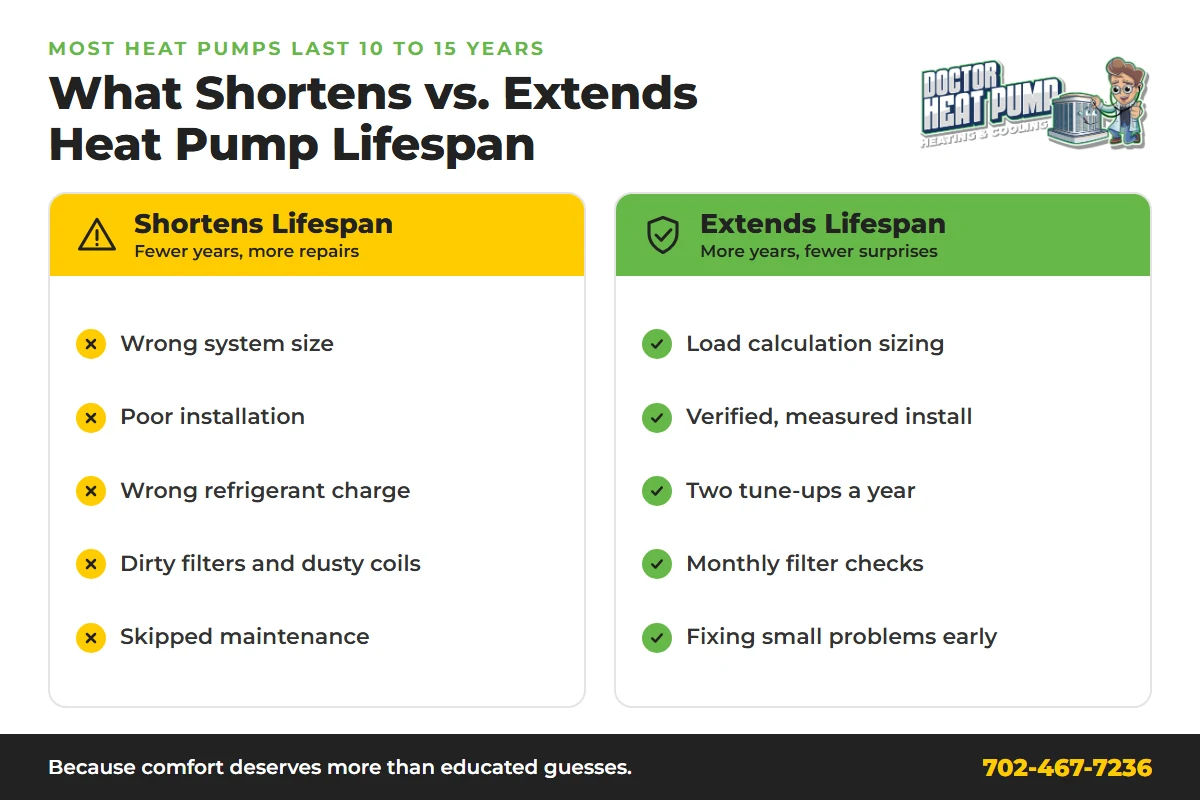
The most common things that shorten a heat pump’s lifespan are wrong sizing, poor installation, and skipped maintenance. These are the biggest culprits.
Wrong System Size
An oversized heat pump turns on and off too often, and an undersized one runs nonstop. Carrier says oversized or undersized units can cut life expectancy to 8 to 10 years. Sizing should come from a load calculation for your home. Learn more in what size heat pump you need.
Poor Installation
Installation mistakes stay with a system for its entire life. ENERGY STAR says improper installation can reduce system efficiency by up to 30 percent and possibly shorten the equipment’s life. See the most common mistakes in our guide to heat pump problems from improper installation.
Incorrect Refrigerant Charge
Too little or too much refrigerant strains the compressor, the most expensive part in the system. A low charge also means a leak, because refrigerant doesn’t get used up. Learn the warning signs of an overcharged heat pump.
Short Cycling
When a heat pump starts and stops every few minutes, each start adds wear to the compressor and electrical parts. Our guide to heat pump short cycling explains the causes and fixes.
Dirty Filters and Coils
Restricted airflow makes the whole system work harder and run hotter. In a dusty climate, this is one of the fastest ways to age a heat pump.
Skipped Maintenance
Without regular checkups, small problems such as a weak capacitor, a slow leak, or a dirty coil go unnoticed until they cause a bigger failure.
Which Heat Pump Parts Wear Out First?
Small electrical parts usually wear out first, while the compressor is built to last the life of the system. Knowing which parts fail first helps you decide whether a repair is worth it.
| Part | What to Expect | Repair or Replace? |
|---|---|---|
| Air filter | Needs regular changes, often monthly in heavy-use seasons | Routine maintenance |
| Capacitors and contactors | Common wear items that may be replaced more than once | Usually an affordable repair |
| Fan motors | Can fail after years of heat and constant use | Usually worth repairing on a healthy system |
| Thermostat and controls | Can fail or become outdated | Usually worth repairing or upgrading |
| Reversing valve | Can stick or leak, especially on older systems | Depends on system age |
| Coils | Can corrode or develop leaks over time | Depends on age and warranty |
| Compressor | Designed to last the life of the system | On an older system, failure often means replacement |
Carrier notes that warranties typically cover key components for 5 to 10 years. Check your warranty terms before you pay for a major part like a compressor or coil.
What Are the Signs Your Heat Pump Is Near the End of Its Lifespan?
The clearest signs are age, rising energy bills, frequent repairs, and uneven comfort. Watch for these warning signs:
- Age. Lennox advises that once a heat pump crosses the 10-year mark, it is time to start planning for replacement. Carrier lists units over 15 years old as a sign to consider replacing.
- Rising energy bills. Costs climb even though your usage hasn’t changed.
- Frequent repairs. You are calling for service every season.
- Uneven comfort. Some rooms stay too hot or too cold.
- Strange noises or odors. Grinding, squealing, or banging can point to serious mechanical problems. Our guide to a heat pump making loud noise covers the common causes.
- Ice that keeps coming back in winter. Repeated icing can signal failing defrost controls or a refrigerant leak. Read what to do when your heat pump is iced up.
- An older refrigerant. Systems that use R-22 are now costly to service.
One warning sign alone doesn’t mean you need a new system. But if you see several at once on a system past the 10-year mark, it is time for a professional evaluation.
Should You Repair or Replace an Aging Heat Pump?
Repair a heat pump when it is relatively young and the fix is affordable. Consider replacing it when it is older and repair costs keep climbing. Two simple rules of thumb can help.
The 50 Percent Rule
Carrier and Lennox both point to a similar guideline. If a repair costs about half the price of a new system, replacement usually makes more financial sense.
The $5,000 Rule
Multiply the age of your system by the cost of the repair. If the result is more than $5,000, replacement is often the better value. For example, a $600 repair on a 12-year-old heat pump comes to $7,200, which points toward replacement. Learn more in our guide to the $5,000 rule for HVAC replacement.
| System Age | Typical Recommendation |
|---|---|
| Under 8 years | Repair in most cases, and check the warranty first |
| 8 to 12 years | Repair minor issues, but weigh major repairs carefully |
| 12 to 15 years | Start planning for replacement, especially after a major failure |
| Over 15 years | Replacement is usually the better long-term value |
What About Older Refrigerants?
Refrigerant type matters too. According to the U.S. EPA, production and import of HCFC-22 (R-22) ended in 2020, so servicing an R-22 system relies on limited supplies. Newer systems use refrigerants covered by the EPA’s HFC technology transition rules. Our guide to R-410A, R-22, and modern refrigerants explains what this means for you.
When replacement makes sense, our guide to heat pump replacement cost in Las Vegas shows what to budget.
How Can You Make Your Heat Pump Last Longer?
The best way to extend heat pump lifespan is to start with a correct installation and keep up with regular maintenance. These habits make the biggest difference:
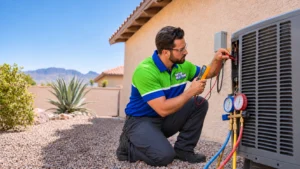
- Schedule two tune-ups a year. Lennox recommends professional tune-ups twice a year, once before heating season and once before cooling season. Our guide to the heat pump tune up in Las Vegas explains what’s included.
- Check your filter monthly. ENERGY STAR recommends checking it every month, especially in heavy-use seasons.
- Keep the outdoor unit clear. Remove leaves, debris, and stored items, and keep plants trimmed back.
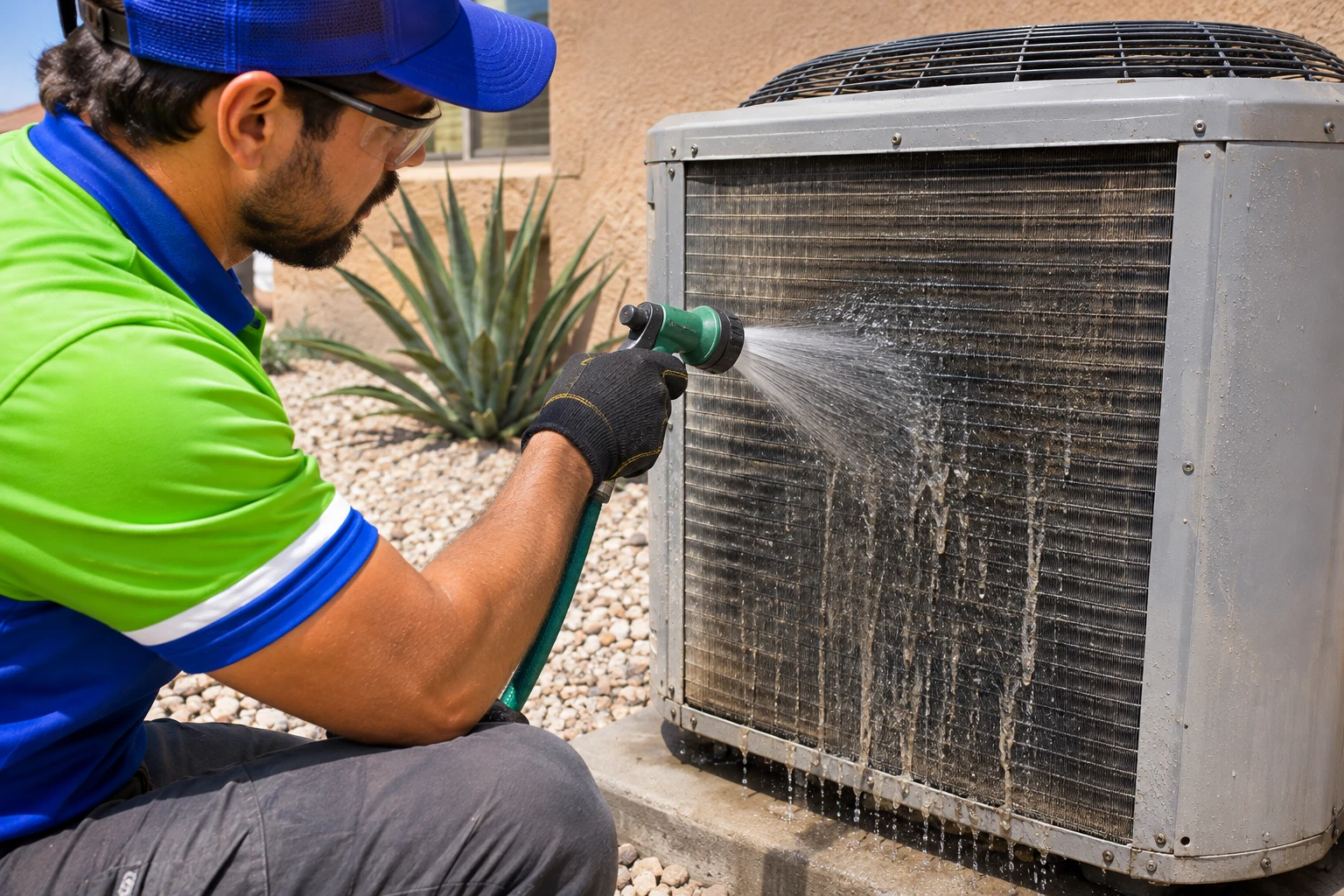
- Rinse the outdoor coil gently. In dusty areas, a light rinse with a garden hose (power off first) helps airflow. Never use a pressure washer on the fins.
- Avoid extreme thermostat settings. Lennox notes that frequent extreme settings shorten life. Small, steady adjustments are easier on the system.
- Fix small problems early. Strange noises, ice that won’t clear, or a system that runs constantly are worth a call before they become a major repair.
- Consider a maintenance plan. A plan keeps checkups on schedule. See whether an HVAC maintenance plan is worth it in Las Vegas.
Do Newer Heat Pumps Last Longer?
Newer heat pumps can last as long as or longer than older models, but only if they are installed and maintained correctly. Modern variable-speed systems often run at lower speeds for longer periods, which can mean fewer hard starts and steadier operation.
That said, newer systems also have more advanced electronics and controls. They reward good installation and regular care, and they can be less forgiving of wrong charge, poor airflow, or dirty coils. A high-end heat pump that is installed poorly can still wear out early.
The takeaway: buy good equipment, but put just as much weight on who installs it and how they prove it was done right.
Why Las Vegas Homeowners Choose Doctor Heat Pump
Doctor Heat Pump is a family-owned company of certified heat pump specialists serving the Las Vegas Valley. Heat pump lifespan is decided by details like charge, airflow, and controls, and that is exactly where we focus.
Through our Clinical Comfort Method™, every visit begins with a Comfort Exam where we take your system’s vitals instead of guessing. You receive a Comfort Diagnosis with the findings, measured results, and photos, so you can track your system’s health year after year and plan ahead instead of being surprised.
When it’s time to decide between repair and replacement, we give you a clear Treatment Plan with honest options and recommend what your home needs, never the biggest sale. Every system we install or service is verified to manufacturer specification, and if it doesn’t meet the standard, we make it right. If another company has recommended a new system, we are happy to provide a Second Opinion.
Frequently Asked Questions
What is the average heat pump lifespan?
Most air-source heat pumps last 10 to 15 years. High-quality, well-maintained systems can reach about 20 years, while geothermal heat pumps often last 20 to 25 years.
Can a heat pump last 20 years?
Yes. A high-quality heat pump that was sized and installed correctly and maintained regularly can reach around 20 years, according to Carrier.
Do heat pumps last as long as air conditioners?
Roughly, yes. Lennox says central air conditioners typically last 12 to 15 years, and air-source heat pumps last 10 to 15 years, even though heat pumps run in both summer and winter.
What shortens a heat pump’s lifespan the most?
The biggest factors are wrong sizing, poor installation, incorrect refrigerant charge, dirty filters and coils, and skipped maintenance.
Is it worth repairing a 15-year-old heat pump?
Usually only for small, inexpensive repairs. For major repairs, like a compressor, replacement is often the better long-term value at that age.
How often should a heat pump be serviced?
Twice a year is ideal: once before cooling season and once before heating season. Check the air filter monthly during heavy use.
Want Your Heat Pump to Reach the Long End of Its Lifespan?
The years you get from a heat pump are mostly earned, not luck. Correct installation, clean airflow, and measured maintenance can add years to your system and save you from an early replacement.
Call Doctor Heat Pump at 702-467-7236 or contact us online to schedule a Comfort Exam. We’ll tell you exactly how your system is doing and what it needs to keep going. Explore our heat pump maintenance, heat pump repair, and heat pump replacement services.
Because comfort deserves more than educated guesses.