

If your heat pump iced up on a cold Las Vegas morning, don’t panic yet. A light layer of frost on the outdoor unit is normal in winter, and your system is built to melt it on its own. Heavy ice that won’t go away, however, is a warning sign.
The difference matters. Normal frost needs no help. Problem ice can block airflow, strain the compressor, and lead to a much bigger repair if the system keeps running.
This guide explains how to tell the two apart, what causes a frozen heat pump, what you can safely do right now, and when to call for repair.
Quick Answer: Is a Heat Pump Iced Up a Problem?
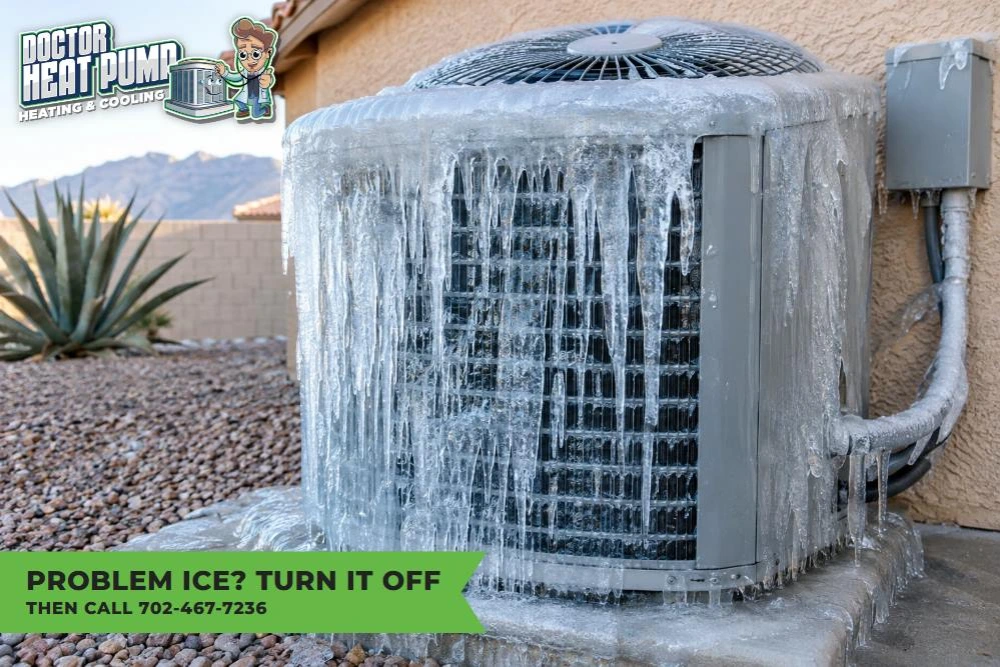
Light frost on the outdoor coil is normal in heating mode, and the defrost cycle should clear it within minutes. Thick ice that covers the unit, stays for hours, or comes back right after melting is not normal and usually needs service.
- Normal: Thin white frost that clears during a short defrost cycle
- Not normal: A solid block of ice, ice on the top or fan, or ice that keeps returning
- Do now: Turn the system off at the thermostat and let the ice melt naturally
- Never: Chip at the ice or pour hot water on the unit
- Call a pro: If the unit refreezes quickly or the ice won’t clear
Why Do Heat Pumps Ice Up in Winter?
Heat pumps ice up in winter because the outdoor coil gets colder than the air around it. In heating mode, the outdoor coil pulls heat from outside air. As it does, moisture in the air can freeze on the coil’s surface.
That is why frost can form even when it isn’t freezing outside. According to Lennox, a defrost cycle at around 45°F is not unusual, because coil surfaces run much colder than the outdoor air.
Las Vegas winter nights often drop into the 30s and low 40s, so a little morning frost is common. Our dry air helps, though. Cold weather with low humidity usually means less frost and fewer defrost cycles than in damp climates. For more on how your system behaves in winter, read our guide to cold weather heat pump performance in Las Vegas.
If you want to understand the science behind it, our plain-English guide to the heat pump refrigeration cycle explains how heat moves through your system.
How Does the Heat Pump Defrost Cycle Work?
The defrost cycle briefly reverses your heat pump so warm refrigerant flows to the outdoor coil and melts the frost. It is a built-in safeguard, not a malfunction.
Lennox says most systems check for frost every 30 to 90 minutes in heating mode, and a defrost cycle usually lasts 5 to 15 minutes. During defrost, you may notice:
- Steam rising from the outdoor unit
- A whooshing sound as the system changes modes
- A short pause in warm air, or slightly cooler air from the vents
- Backup heat turning on to keep your home comfortable
All of this is normal. If cool air during defrost worries you, our article on why a heat pump blows cold air explains what to expect.
Normal Frost vs. Problem Ice: How Can You Tell?
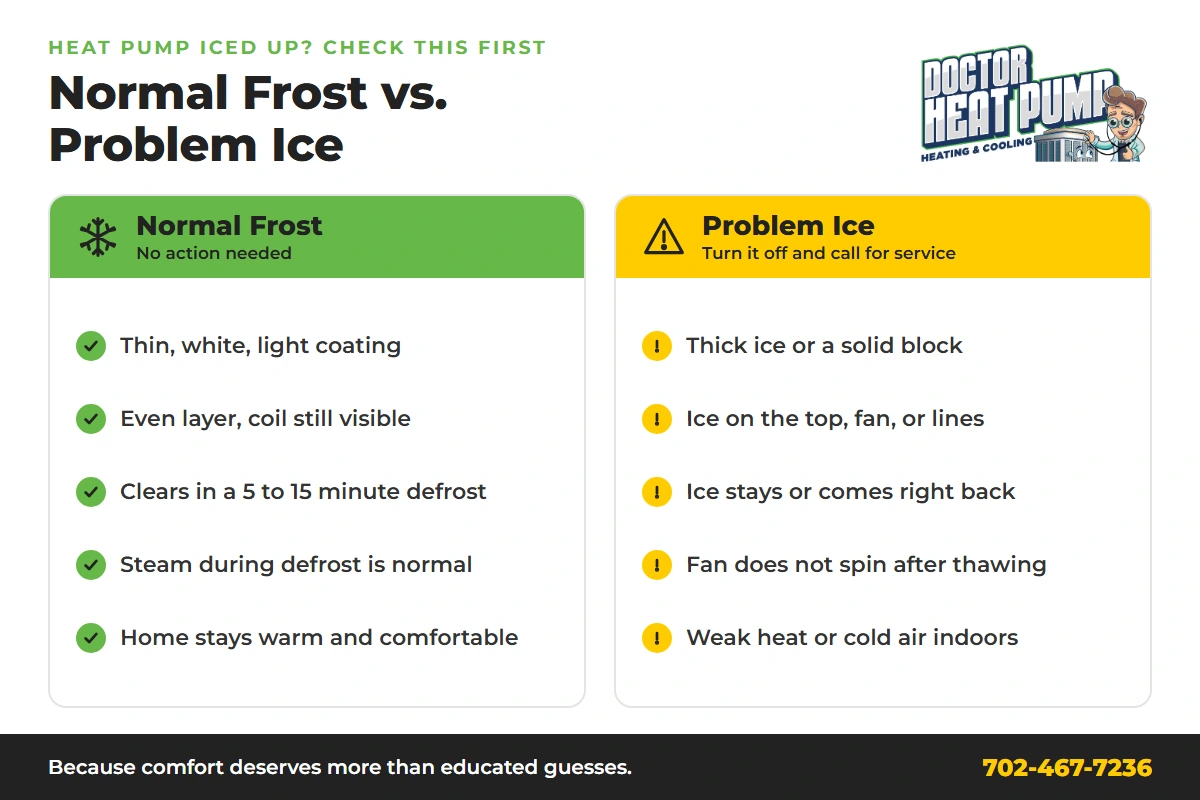
Normal frost is thin and temporary, while problem ice is thick, widespread, or keeps coming back. Use this side-by-side check.
| What You See | Normal Frost | Problem Ice |
|---|---|---|
| Thickness | Thin, white, light coating | Thick, clear, or solid block |
| Where it forms | Even layer on the coil | Top of unit, fan, or refrigerant lines |
| Coverage | Partial, coil still visible | Coil fully covered |
| After defrost | Clears within minutes | Stays, or returns quickly |
| Heating | Home stays comfortable | Weak heat or cold air |
| Next step | No action needed | Turn it off and call for service |
What Causes a Heat Pump to Freeze Up?
A heat pump usually freezes up because something stops the defrost cycle from working or blocks the airflow it needs. These are the most common causes.
Defrost System Problems
The defrost control board, timer, or sensor decides when to melt the frost. If one of these parts fails, the defrost cycle may never start, so ice keeps building. Lennox describes this as one of the most common causes of a severe freeze-up.
Low Refrigerant
A refrigerant leak can make the coil run too cold. Low refrigerant can also keep the defrost cycle from fully clearing the coil, so each cycle leaves more ice behind. Refrigerant doesn’t get used up, so a low charge almost always means a leak that needs repair.
Restricted Airflow
A dirty indoor filter, closed vents, or blocked ducts reduce the air moving across the coils. Outdoors, plants, debris, or items stored against the unit can do the same. In our dusty climate, a clogged filter is one of the easiest problems to miss.
Failed Parts
A bad outdoor fan motor or a stuck reversing valve can also cause icing. If the fan doesn’t spin after the ice melts, that part may be the problem.
Drainage and Water Dripping on the Unit
Melted water needs somewhere to go. A clogged base pan, or a roof drip or gutter leak landing on the unit, can refreeze into a solid block. Las Vegas homes with tile roofs should check where runoff lands.
Can a Heat Pump Ice Up in Summer?
Yes, but in summer the ice forms on the indoor coil instead of the outdoor unit. In cooling mode, the indoor coil does the cold work. If airflow is too low or refrigerant is low, that coil can freeze.
Signs of an iced indoor coil include warm air from the vents, ice on the refrigerant line near the indoor unit, and water around the air handler as the ice melts. When that happens, turn the system off and let the coil thaw, then check your filter. Our guide to a heat pump leaking water covers the melt-water side of this problem.
What Should You Do If Your Heat Pump Is Iced Up?
If you find your heat pump iced up, turn it off at the thermostat, clear the area around the unit, and let the ice melt on its own. Follow these steps:
- Turn the system off at the thermostat. Running a frozen unit puts extra strain on the compressor.
- Use backup heat if you need it. If your system has auxiliary or emergency heat, the Emergency Heat setting can keep your home warm while the outdoor unit rests. It usually costs more to run, so use it only until the problem is fixed.
- Clear the area. Lennox recommends keeping at least two feet of open space around the outdoor unit.
- Check the indoor filter. Replace it if it looks dirty.
- Let the ice melt naturally. Lennox says this typically takes 2 to 4 hours when temperatures are above freezing.
- Restart and watch. Once the ice is gone, turn the heat back on and watch the next defrost cycle.
What not to do:
- Don’t chip, scrape, or pry the ice. You can puncture the coil or bend the fins and fan blades.
- Don’t pour hot water on the unit. Sudden temperature changes can crack parts, and the water can refreeze in the base.
- Don’t keep resetting or restarting a unit that freezes again right away.
When Should You Call a Professional for an Iced-Up Heat Pump?
Call a professional if your heat pump iced up and the ice won’t melt, comes back quickly, or appears with other warning signs. According to Lennox, you should get help if:
- The unit refreezes soon after thawing
- Ice doesn’t melt within 6 to 8 hours
- Refrigerant lines are covered in ice
- The outdoor fan doesn’t spin after the ice melts
- You hear grinding, squealing, or banging
- The defrost cycle never seems to start
- Ice forms on only one side of the unit
Also watch for related symptoms, such as short cycling or a heat pump not heating your home. On a cold night with vulnerable family members at home, see our guide on emergency HVAC repair in Las Vegas.
How Much Does It Cost to Fix a Frozen Heat Pump in Las Vegas?
The cost to fix a heat pump iced up depends on what caused the ice. A dirty filter costs only a few dollars to fix. A failed part costs more. These are general 2026 ranges, not quotes.
| Repair | Typical Cost Range |
|---|---|
| Dirty filter replacement | A few dollars |
| Refrigerant leak repair | $300 – $800 |
| Reversing valve replacement | $400 – $1,000 |
| Drain pan replacement | $200 – $500 |
| Compressor replacement | $1,200 – $2,800 |
| Defrost control board, sensor, or fan motor | Varies by model, quoted after diagnosis |
Turning the unit off early is the cheapest step you can take. Running a frozen heat pump for days can turn a modest repair into a compressor replacement. For more on repair options, see our heat pump repair guide.
How Can You Prevent Your Heat Pump From Icing Up?
The best prevention is clean airflow, good drainage, and regular maintenance. A few simple habits go a long way:
- Check your filter monthly. ENERGY STAR recommends inspecting it every month. Dust can clog filters quickly here.
- Keep the outdoor unit clear. Leave at least two feet of open space around it, and keep plants and stored items away.
- Watch where water lands. Fix gutter leaks or roof runoff that drips onto the unit.
- Schedule a fall tune-up. A technician can test the defrost controls, sensors, refrigerant charge, and airflow before winter. Our guide to the heat pump tune up in Las Vegas explains what is included.
Why Las Vegas Homeowners Choose Doctor Heat Pump
Doctor Heat Pump is a family-owned company of heat pump specialists serving Las Vegas, Henderson, and North Las Vegas. Heat pumps live or die on correct charge, airflow, and controls, and that is exactly where we focus.
When your heat pump freezes, we don’t guess. Through the Clinical Comfort Method™, we run a full Comfort Exam, measure the system’s vitals, and test the defrost controls to find the real cause.
You receive a Comfort Diagnosis with our findings, photos, and a clear Treatment Plan in plain language. There is no pressure and no upselling. If another company has already recommended a major repair, we are happy to provide a Second Opinion.

Frequently Asked Questions
Why is my heat pump iced up?
Light frost is normal in winter heating mode. Heavy ice usually means the defrost system isn’t working, refrigerant is low, airflow is blocked, or water is dripping onto the unit and refreezing.
Is it safe to run a heat pump that is iced up?
Not for long. Running a heavily iced unit strains the compressor and reduces heating. Turn it off at the thermostat and use backup heat, if you have it, until the ice melts.
How long should a heat pump defrost cycle last?
Usually 5 to 15 minutes, according to Lennox. Frequent or very long defrost cycles may point to dirty coils, faulty sensors or controls, or low refrigerant.
Can I pour warm water on my frozen heat pump?
No. Hot water can crack parts, and the runoff can refreeze in the base of the unit. Let the ice melt naturally instead.
Why is my heat pump steaming?
Steam during defrost is normal. It is simply frost turning into water vapor as the outdoor coil warms up.
Does a heat pump ice up in Las Vegas?
Yes, especially on cold, clear winter mornings. Our dry air keeps frost lighter than in humid climates, so heavy ice here is more likely a sign of a problem.
Heat Pump Iced Up? Get It Checked Before It Gets Worse
A little frost is your heat pump doing its job. A block of ice is your heat pump asking for help. If you aren’t sure which one you’re looking at, we can measure it and tell you for certain.
Call Doctor Heat Pump at 702-467-7236 or contact us online. We serve Las Vegas, Henderson, and North Las Vegas.
Because comfort deserves more than educated guesses.