You switch your heat pump to heating mode, wait a few minutes, and put your hand in front of the vent — and the air coming out feels cold. It’s one of the most frustrating HVAC experiences a Las Vegas homeowner can have, especially when overnight temperatures are dropping into the 30s and you’re counting on the system to deliver. At Doctor Heat Pump, this is one of the most common heating calls we receive in the fall and winter months. The good news is that heat pump blowing cold air isn’t always a sign of a serious problem. Sometimes it’s completely normal. Other times it signals something that needs attention before it gets worse. This guide helps you tell the difference.
First: Understand How Heat Pump Heating Actually Works
Before troubleshooting, one concept changes how you interpret what you’re feeling at the vent. A heat pump doesn’t heat air the same way a gas furnace does. A furnace burns fuel and produces very hot air — typically 120°F to 140°F at the supply vents. That air feels unmistakably hot when you hold your hand near the vent.
A heat pump works differently. It extracts heat from outdoor air and transfers it inside — a process that’s highly efficient but produces warmer air rather than hot air. Supply air from a heat pump in heating mode typically runs between 85°F and 100°F. That’s warm enough to heat your home effectively, but it can feel cool or lukewarm compared to what you’d expect from a furnace.
So if your heat pump is blowing air that feels warm but not hot — that’s likely normal operation, not a problem. If it’s blowing air that feels room temperature or genuinely cold, something needs attention.
Normal Reasons a Heat Pump Blows Cool Air
Several situations cause a heat pump to blow cool or lukewarm air that are completely expected and not a cause for concern.
Startup delay
At startup, the refrigerant in the system hasn’t fully pressurized yet. It takes two to three minutes for the system to stabilize and begin delivering warm air. If you’ve just turned the system on and the air feels cool, wait five minutes before concluding something is wrong.
Defrost cycle
Heat pumps periodically enter a defrost cycle to melt frost that accumulates on the outdoor coil in cold, humid conditions. During defrost, the system temporarily reverses to cooling mode to warm the outdoor coil. Cool air may come from the vents for 5 to 15 minutes while this happens. You may also notice steam rising from the outdoor unit and the outdoor fan stopping while the compressor continues running. This is normal and will resolve on its own.
Mild outdoor temperatures
On mild Las Vegas days — 55°F to 65°F — the heat pump may run in a mode that delivers air only slightly warmer than room temperature. The system is still working correctly. It’s simply extracting a smaller amount of heat because the temperature differential between indoors and outdoors is small.
Auxiliary heat hasn’t activated yet
On cold nights, auxiliary heat strips supplement the heat pump when outdoor temperatures drop low enough to reduce heat pump efficiency. If the system has just started and the auxiliary heat hasn’t activated yet, supply air may feel cooler until the full heating output kicks in.
Problem Reasons a Heat Pump Is Blowing Cold Air
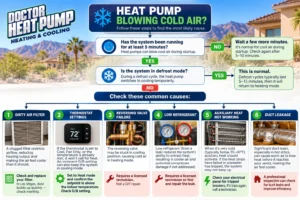
If the air genuinely feels cold — not just lukewarm — and the system has been running for more than five minutes outside of a defrost cycle, one of these issues is likely the cause.
Reversing Valve Failure
The reversing valve is the component that switches the heat pump between cooling and heating mode. When it fails — either getting stuck in cooling position or failing to switch cleanly — the system runs in cooling mode while the thermostat calls for heat. The result is cold air from the vents despite correct thermostat settings.
Signs of a reversing valve problem include cold air in heating mode that doesn’t resolve after the startup period, or air that alternates between warm and cold during a heating cycle. Reversing valve replacement requires a licensed technician — it’s not a homeowner repair. For more on heat pump components and how they work together, see our guide on how the heat pump refrigeration cycle works.
Low Refrigerant
Refrigerant carries heat through the system. Low refrigerant — always caused by a leak, never normal depletion — reduces the heat pump’s ability to extract heat from outdoor air. In heating mode, a system running low on refrigerant delivers air that’s warmer than outdoor air but significantly cooler than it should be.
Low refrigerant also puts the compressor at risk. Refrigerant carries the oil that lubricates compressor internals — running low on refrigerant means running low on lubrication. Left unaddressed, this causes compressor damage that turns a $300 to $800 refrigerant repair into a $1,200 to $2,800 compressor replacement. Address refrigerant leaks promptly.
Dirty Air Filter
A severely clogged air filter restricts airflow across the evaporator coil. In heating mode, restricted airflow means less air is being warmed and distributed through the home. The system runs but can’t meet the heating demand — and the air that does make it through feels cooler than it should because the heat exchange process is compromised.
Check the filter before calling for service. In Las Vegas, where dust accumulates rapidly, a filter that looked clean a few weeks ago may be significantly restricted now. Monthly filter checks are essential. For more on what a professional service visit covers, see our heat pump maintenance services in Las Vegas.
Auxiliary Heat Not Working
If outdoor temperatures have dropped below the point where the heat pump can efficiently meet heating demand on its own — typically below 35°F to 40°F in Las Vegas — the auxiliary heat strips should activate automatically to supplement output. If these strips have failed — a burned-out element, a tripped breaker, or a faulty control — the heat pump continues running but can’t maintain the setpoint. The air may feel warm but not warm enough, especially on the coldest nights.
Check the electrical panel for any tripped breakers associated with the air handler or auxiliary heat. A tripped breaker is easy to reset — but if it trips again immediately, that signals an electrical issue that needs a technician.
Thermostat Issues
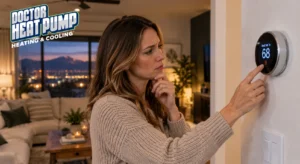
A thermostat set incorrectly — to Cool, Fan Only, or a temperature already met — won’t call for heat regardless of what the display shows. Confirm the thermostat is set to Heat mode and that the setpoint is above the current indoor temperature. Also confirm the O/B terminal setting on the thermostat is configured correctly for your system — an incorrect setting causes the reversing valve to stay in cooling position even when heat is called for.
Duct Leakage
Significant duct leakage in a hot attic causes conditioned air to lose heat before it reaches the vents. In heating mode, warm air leaving the air handler travels through ducts in an uninsulated attic where temperatures can drop significantly in winter. By the time that air reaches the vent in a living space, it may be noticeably cooler than when it left the air handler. This is more common in older Las Vegas homes with original ductwork.
Step-by-Step: What to Check Before Calling for Service
Work through these checks in order before scheduling a service call. Many heat pump blowing cold air situations resolve without a technician.
Step 1 — Check the thermostat
Confirm it’s set to Heat, the setpoint is above the current indoor temperature, and the fan is set to Auto rather than On. A fan set to On runs continuously — including during periods when the system isn’t actively heating, which means room-temperature air blows from the vents even when the system is between cycles.
Step 2 — Wait it out
If the system just started, give it five minutes. Startup delays and the transition from defrost mode both produce brief periods of cool air that resolve on their own.
Step 3 — Check the air filter
Pull the filter and inspect it. A heavily restricted filter is one of the most common causes of reduced heating performance. Replace it if it’s dirty and run the system again.
Step 4 — Check the outdoor unit
Go outside and confirm the outdoor unit is running. Listen for the compressor. Confirm there’s no significant ice buildup that isn’t clearing on its own. Check that nothing is blocking airflow around the unit.
Step 5 — Check the electrical panel
Look for any tripped breakers associated with the HVAC system — typically labeled as heat pump, air handler, or furnace. Reset any tripped breakers and test the system again.
Step 6 — Call for service
If none of the above resolves the problem, it’s time for a professional diagnosis. A reversing valve issue, refrigerant leak, or failed auxiliary heat element all require a licensed technician with the right equipment to diagnose and repair correctly.
When to Call Immediately
Some situations warrant a call without working through the checklist first.
Call Doctor Heat Pump right away if:
- The system is running but the home isn’t warming at all despite the thermostat calling for heat for more than 30 minutes
- You hear new sounds — banging, grinding, or clicking — alongside the cold air
- You notice ice on the outdoor unit that isn’t clearing after the defrost cycle
- A breaker trips repeatedly after being reset
- The system is switching between warm and cold air erratically during the same heating cycle
These symptoms point to issues — reversing valve failure, compressor problems, electrical faults — that worsen if the system continues running. Turning the system off and calling for service is the right call.
Why Las Vegas Homeowners Trust Doctor Heat Pump
Doctor Heat Pump is a local, family-owned HVAC company serving Las Vegas, Henderson, and North Las Vegas. We specialize in heat pump repair, installation, and service across the Las Vegas Valley — including the full range of heating problems that Las Vegas’s unique climate creates each winter.
When you call us about a heat pump blowing cold air, we diagnose accurately and explain clearly what we find. We don’t recommend unnecessary repairs — and we don’t leave you with a vague answer. Our goal is always for you to understand exactly what’s happening with your system and what your options are.
Frequently Asked Questions
Is it normal for a heat pump to blow cool air sometimes?
Yes — during startup and defrost cycles, cool or lukewarm air is completely normal and temporary. If cool air continues for more than 10 to 15 minutes outside of a defrost cycle, something needs attention.
How do I know if my heat pump is in defrost mode?
Look for steam rising from the outdoor unit, the outdoor fan stopping while the compressor continues running, and a brief period of cool air from indoor vents. Defrost cycles typically last 5 to 15 minutes and occur every 30 to 90 minutes in cold, humid conditions.
Can I run my heat pump if it’s blowing cold air?
It depends on the cause. If it’s a startup delay or defrost cycle, yes — continue running normally. If a breaker keeps tripping, the outdoor unit is heavily iced over, or you hear new sounds, turn the system off and call for service. Running a system with a serious fault can cause additional damage.
Why does my heat pump blow cold air only at night?
Cold air at night specifically often indicates an auxiliary heat problem. When overnight temperatures drop below the heat pump’s efficient operating range, auxiliary heat should activate automatically. If the strips aren’t working, the system can’t maintain warmth on the coldest nights even if it performed fine during the warmer daytime hours.
How much does it cost to fix a heat pump blowing cold air in Las Vegas?
Cost depends entirely on the cause. A filter replacement is a few dollars. A thermostat adjustment is often no cost. A refrigerant leak repair runs $300 to $800. A reversing valve replacement runs $400 to $1,000. A failed auxiliary heat element runs $200 to $600. A diagnostic visit confirms which issue you’re dealing with before any repair costs are incurred.
Heat Pump Blowing Cold Air? Don’t Wait on It.
A heat pump that isn’t heating on a Las Vegas winter night isn’t something to monitor and hope improves. Most causes of heat pump blowing cold air have straightforward solutions when caught early — and several worsen when the system keeps running with a developing fault.
Doctor Heat Pump is ready to help across Las Vegas, Henderson, and North Las Vegas. Call us at 702-467-7236 or contact us online at the first sign of a heating problem. We’ll diagnose it accurately and get your system back to full heating performance before the next cold night arrives.
References
- U.S. Department of Energy — Heat Pump Heating Systems
- ENERGY STAR — Heat Pump Performance and Maintenance
- Lennox — Heat Pump Heating Technology