
Your heat pump’s compressor is the heart of the system. It pressurizes the refrigerant that moves heat in and out of your home. When it fails, the entire system stops working. In Las Vegas, where temperatures regularly exceed 110°F, a failed compressor isn’t just an inconvenience — it’s an emergency. At Doctor Heat Pump, compressor issues are among the most serious calls we receive. The good news is that most compressor failures give warning signs before they happen. Knowing what to watch for can save you from a full system breakdown in the middle of summer.
This guide covers what the compressor does, the most common failure signs, what causes them, and what your options are when a diagnosis comes back with bad news.
What Does a Heat Pump Compressor Do?
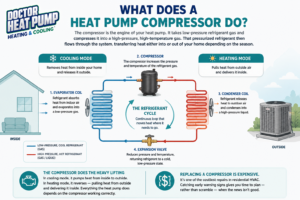
The compressor is the engine of your heat pump. It takes low-pressure refrigerant gas and compresses it into a high-pressure, high-temperature gas. That pressurized refrigerant then flows through the system, transferring heat either into or out of your home depending on the season.
In cooling mode, the compressor pumps heat from inside your home to the outdoor unit. In heating mode, it reverses — pulling heat from the outdoor air and delivering it inside. Everything the heat pump does depends on the compressor working correctly.
Replacing a compressor is expensive. It’s one of the costliest repairs in residential HVAC. Catching early warning signs gives you time to plan — rather than scramble — when the news isn’t good.
7 Warning Signs Your Heat Pump Compressor Is Failing
1. The System Is Running but Not Cooling or Heating
This is the most common symptom. The fan runs and the unit turns on, but the air coming out isn’t the right temperature. The system appears to be working, but it isn’t doing anything. A compressor that’s lost its ability to pressurize refrigerant will circulate air without actually conditioning it.
2. Hard Starting
Hard starting happens when the compressor struggles to turn on. You may hear clicking, clanking, or a brief humming sound before the system either starts with difficulty or shuts back off. It often takes multiple attempts before the system runs. Hard starting is a classic early sign of a failing compressor or a worn start capacitor.
3. Loud or Unusual Noises
A healthy compressor runs with a relatively steady, low hum. Watch for these specific sounds:
- Banging or clanking — loose or broken internal components
- Screeching or grinding — metal-on-metal contact inside the compressor
- Rattling — loose hardware around the compressor housing
- Clicking at startup or shutdown — normal in small amounts, but persistent clicking signals an electrical issue
Any new sound from the outdoor unit deserves a call to your technician. Don’t wait to see if it goes away on its own.
4. Tripping the Circuit Breaker
A compressor that’s drawing too much electrical current will trip the breaker repeatedly. If your heat pump keeps tripping the same breaker, the compressor may be failing electrically. This is also a potential fire hazard. Don’t keep resetting the breaker and running the system — call for service.
5. Warm Air in Cooling Mode
If the system runs but blows warm or room-temperature air during summer, the compressor isn’t doing its job. This can also indicate low refrigerant — but refrigerant doesn’t deplete on its own. Low refrigerant always means a leak, and a leaking system puts extra strain on the compressor over time.
6. Ice on the Outdoor Unit
Some frost during heating mode is normal. But significant ice buildup that doesn’t clear during the defrost cycle is not. Ice formation in cooling mode is always a problem. It typically indicates restricted airflow, low refrigerant, or a compressor that isn’t maintaining proper operating pressures.
7. The System Short Cycles
Short cycling is when the system turns on, runs briefly, then shuts off — over and over — without completing a full cooling or heating cycle. It puts enormous stress on the compressor with every startup. Left unaddressed, short cycling accelerates compressor wear dramatically.
What Causes Heat Pump Compressor Failure in Las Vegas?
Las Vegas is hard on compressors. Several specific factors accelerate wear in the desert climate.
Extreme heat
Compressors generate their own heat during operation. In a 115°F Las Vegas summer, the outdoor unit is trying to reject heat into air that’s already extremely hot. This forces the compressor to work harder and run hotter than it would in a moderate climate. Over years of operation, the thermal stress accumulates.
Dirty condenser coils
Desert dust accumulates on condenser coils rapidly. A coated coil can’t reject heat efficiently. The compressor compensates by running at higher pressures — which generates more heat and accelerates internal wear. Annual coil cleaning is one of the most important things you can do to protect your compressor.
Low refrigerant
A refrigerant leak causes the compressor to run without adequate lubrication. Refrigerant carries the oil that lubricates internal compressor components. Low refrigerant starves the compressor of lubrication and causes overheating. Over time, this causes permanent internal damage.
Electrical problems
Voltage fluctuations, poor connections, and failing capacitors all stress the compressor’s electrical components. Las Vegas summers place peak demand on the electrical grid, and voltage fluctuations are more common during high-demand periods. A whole-home surge protector and regular electrical connection inspections are worthwhile investments.
Age and hours
Las Vegas heat pump systems log more operating hours per year than systems in moderate climates. A system that runs 2,500 hours per year in Las Vegas reaches the equivalent wear of a 20-year system in a mild climate within 12 to 15 years. Age combined with any of the above factors creates the conditions for compressor failure.
Compressor Repair vs. Replacement: What to Expect
When a technician diagnoses compressor failure, you typically face one of three scenarios.
Scenario 1: The compressor can be replaced
In some cases — particularly on newer systems — replacing only the compressor makes financial sense. Compressor replacement typically costs $1,200 to $2,800 depending on the system size and brand. If the rest of the system is in good condition and relatively new, this can be worth doing.
Scenario 2: The full system needs replacement
On systems more than 8 to 10 years old, replacing only the compressor is rarely the right call. The compressor is the most expensive component, but the rest of the system has also aged. Putting a new compressor in an old system is like replacing the engine in a car with 200,000 miles — the other parts will follow shortly.
Scenario 3: The compressor is under warranty
Many manufacturers offer 5 to 10-year compressor warranties on qualifying systems with documented annual maintenance. If your system is within the warranty period and you have maintenance records, the compressor may be covered. This is one of the most important reasons to keep service records.
Apply the 5,000 rule when evaluating the decision. Multiply the system’s age by the repair cost. If the result exceeds $5,000, replacement typically makes more sense than repair.
Can You Prevent Compressor Failure?
Not entirely — all mechanical components eventually wear out. But you can significantly extend compressor life with consistent maintenance.
Annual professional service
A yearly heat pump service visit catches the small issues — dirty coils, low refrigerant, worn capacitors, loose electrical connections — before they put compressor-damaging stress on the system. Schedule it every spring before the cooling season begins.
Monthly filter changes
A clogged filter restricts airflow across the evaporator coil. Restricted airflow causes the system to run at abnormal pressures — directly stressing the compressor. In Las Vegas, monthly filter checks are essential. Change filters more frequently during dust storm season.
Keep the outdoor unit clear
Maintain at least two feet of clearance around the outdoor unit. Check after dust storms for debris accumulation on or around the unit. Clear the area before running the system after any major storm.
Don’t ignore warning signs
The warning signs listed earlier don’t resolve themselves. Hard starting, unusual noises, and repeated breaker trips are all signals to call a technician immediately. Catching a problem early — when a capacitor or contactor replacement might solve it — is always better than waiting until the compressor fails completely.
Why Las Vegas Homeowners Trust Doctor Heat Pump
Doctor Heat Pump is a local, family-owned HVAC company serving Las Vegas, Henderson, and North Las Vegas. We specialize in heat pump repair, installation, and service across the Las Vegas Valley — including compressor diagnostics and replacement on all major brands.
When we diagnose a compressor issue, we give you an honest assessment. We’ll tell you whether repair or replacement makes financial sense for your specific situation. We don’t push unnecessary replacements — and we don’t patch problems that need a real solution. Our goal is always the right answer for your home and your budget.
Frequently Asked Questions
How long does a heat pump compressor last in Las Vegas?
With proper maintenance, most heat pump compressors last 10 to 15 years. Las Vegas systems run more hours per year than systems in moderate climates, which can push toward the lower end of that range. Annual professional service is the single most effective thing you can do to extend compressor life.
How much does it cost to replace a heat pump compressor in Las Vegas?
Compressor replacement typically runs $1,200 to $2,800 for parts and labor in the Las Vegas market. Costs vary based on system size, brand, and whether the compressor is under warranty. On systems older than 8 to 10 years, full system replacement is often the more cost-effective path.
Can I run my heat pump with a bad compressor?
No. A failing compressor that’s drawing excessive current is a fire hazard. A system that’s running but not conditioning air is wasting electricity and potentially damaging other components. If you suspect compressor failure, turn the system off and call for service.
Is a noisy compressor always failing?
Not always — some sounds are normal. A steady low hum is expected. But banging, grinding, screeching, or persistent clicking are not normal and warrant immediate inspection. The earlier you catch a developing problem, the more options you have.
Does a compressor warranty cover labor costs?
Most manufacturer compressor warranties cover the part itself but not the labor to replace it. Some extended warranty programs cover both. Check your warranty documentation carefully and ask your contractor what’s covered before authorizing repairs.
Don’t Wait Until Your Compressor Fails Completely
In Las Vegas, a failed compressor in July isn’t something you can put off. Emergency service calls during peak summer have longer wait times and higher costs. Acting on warning signs early keeps you in control of the timeline and the budget.
Doctor Heat Pump offers diagnostic service across Las Vegas, Henderson, and North Las Vegas. Call us at 702-467-7236 or contact us online at the first sign of trouble. We’ll tell you exactly what’s happening and what your options are — before the situation becomes an emergency.
References
- U.S. Department of Energy — Heat Pump Systems and Maintenance
- ENERGY STAR — Heat Pump Maintenance and Efficiency
- Lennox — Heat Pump Components and Service