

Las Vegas winters may be milder than other parts of the country, but heating costs still add up quickly when overnight temperatures drop into the 30s and 40s. At Doctor Heat Pump, we believe that implementing free winter energy saving tips shouldn’t require expensive upgrades or complicated installations. Additionally, these no-cost strategies can reduce your heating bills by 15-30% without spending a single dollar on equipment or services. The best free winter energy saving tips leverage simple behavioral changes, strategic adjustments, and smart utilization of your existing heat pump system—and Las Vegas homeowners can implement every single one of these free winter energy saving tips today to start saving immediately on their heating costs.
Understanding Las Vegas Winter Heating Costs
Before diving into free winter energy saving tips, it’s important to understand where your heating dollars go. Additionally, Las Vegas’s unique desert climate creates specific opportunities for no-cost savings.
Average Winter Heating Costs in Las Vegas
| Home Size | Typical Winter Heating (Nov-Feb) | Potential Savings with Free Tips | Annual Savings |
|---|---|---|---|
| 1,500 sq ft | $180-280 | $35-70 (20-25%) | $35-70 |
| 2,000 sq ft | $240-380 | $50-95 (20-25%) | $50-95 |
| 2,500 sq ft | $300-480 | $60-120 (20-25%) | $60-120 |
| 3,000 sq ft | $360-580 | $75-145 (20-25%) | $75-145 |
Key Insight: While Las Vegas winters are mild compared to northern states, the 40-50°F nighttime temperature drops still trigger significant heating costs. However, these free winter energy saving tips take advantage of our sunny days and moderate climate to maximize savings.
Las Vegas Climate Advantages for Free Energy Savings
What Makes Vegas Different:
- 300+ sunny days annually – Free solar heat gain through windows
- Low humidity (20-40%) – Dry air feels warmer at lower temperatures
- Significant day-night swings – Strategic timing maximizes free heating
- Mild average temps – Most days require minimal heating assistance
- Abundant sunshine – South-facing windows provide substantial free heat
Therefore, these free winter energy saving tips leverage Las Vegas’s unique climate characteristics to reduce heating costs without any investment.
Free Winter Energy Saving Tips: Temperature Management
Tip #1: Lower Your Thermostat by 2-3 Degrees
The Science: Every degree you lower your thermostat reduces heating costs by approximately 3%. Therefore, reducing your setting from 72°F to 68°F saves roughly 12% on heating bills.
Las Vegas Application: Due to our dry climate, 68°F feels comfortable—unlike humid regions where lower temperatures feel colder. If needed, wearing a light sweater indoors maintains comfort at 68°F.
Implementation Strategy:
- Week 1: Reduce thermostat to 70°F (most people won’t notice)
- Week 2: Drop to 69°F if comfortable
- Week 3: Settle at 68°F for optimal savings/comfort balance
Annual Savings: $50-$120 for average 2,000 sq ft home
Pro Tip: Lower temperature 5°F at night when you’re under blankets. This single free winter energy saving tip saves an additional 5-8% on heating costs.
Tip #2: Use Strategic Thermostat Scheduling (Already Free!)
If you have a programmable thermostat (most modern heat pumps do), these free winter energy saving tips maximize its potential:
Optimal Las Vegas Winter Schedule:
| Time Period | Temperature Setting | Reasoning |
|---|---|---|
| 6 AM – 8 AM | 68-70°F | Morning comfort while getting ready |
| 8 AM – 5 PM | 62-64°F (if home empty) | Major savings during workday |
| 5 PM – 10 PM | 68-70°F | Evening comfort for family time |
| 10 PM – 6 AM | 64-66°F | Sleeping comfort, significant savings |
Weekend Adjustments:
- Raise daytime temps slightly when home
- Maintain lower nighttime settings
- Pre-warm house before waking
Why It Works: Your heat pump uses 40-50% less energy maintaining 64°F versus 70°F. Additionally, the 8-hour workday setback alone saves 15-20% on heating costs.
Caution for Heat Pumps: Avoid temperature swings greater than 4-5°F per adjustment. Large setbacks force heat pumps to use auxiliary heat (expensive electric resistance strips). Instead, these free winter energy saving tips recommend gradual adjustments.
Tip #3: Zone Your Home with Closed Doors
The Strategy: Close doors to unused rooms and redirect heating to occupied spaces. This free winter energy saving tip reduces the volume your heat pump must condition.
How to Implement:
- Close doors to guest bedrooms, offices, and storage rooms
- Close HVAC vents 50-75% in unused spaces (never fully close—damages system)
- Place door draft stoppers at unused room entrances
- Keep bathroom doors closed when not in use
Las Vegas Application: Many Vegas homes have 3-4 bedrooms but only 2-3 people. Closing off 1-2 bedrooms can reduce heating costs by 10-15%.
Important Note: Never close more than 20-30% of vents in your home, as this can damage your heat pump. The goal is strategic redirection, not complete blocking.
Free Winter Energy Saving Tips: Maximizing Solar Heat Gain
Tip #4: Open South-Facing Window Coverings During Sunny Days
The Science: Las Vegas receives intense solar radiation even in winter. South-facing windows can provide 5,000-10,000 BTUs of free heating per window on sunny days—equivalent to running a 1,500-watt space heater for free.
Implementation Strategy:
Sunny Days (Most Days in Las Vegas):
- 9 AM – 4 PM: Open blinds/curtains on south-facing windows
- Allow direct sunlight to warm floors and furniture
- Close east-facing windows after 10 AM
- Close west-facing windows before 2 PM (too much heat loss through glass)
Cloudy Days or Evenings:
- Close all window coverings at sunset
- Window coverings act as insulation against cold glass
- Reduces heat loss by 10-25%
Room-by-Room Strategy:
- Living rooms with south windows: Maximum sun exposure
- Bedrooms: Close curtains except during peak solar hours
- North-facing rooms: Keep covered (minimal sun, maximum heat loss)
Annual Savings Potential: $40-$80 by strategically using free solar heat gain
Tip #5: Use Thermal Mass to Store Free Solar Heat
The Concept: Dense materials (tile, concrete, stone) absorb solar heat during the day and release it slowly through the evening—extending the benefit of free winter energy saving tips.
No-Cost Implementation:
If You Have Tile or Concrete Floors:
- Remove area rugs from sunny spots during winter
- Allow sun to directly heat thermal mass
- Replace rugs in evening to trap stored heat
Strategic Furniture Placement:
- Move furniture away from south-facing windows temporarily
- Maximize floor area exposed to direct sunlight
- Dark-colored furniture absorbs more heat than light colors
Why It Works in Las Vegas: Our intense winter sun (even at 50-60°F outside) heats thermal mass to 75-85°F. This stored heat radiates for 4-6 hours after sunset, reducing evening heating needs.
Free Winter Energy Saving Tips: Heat Pump Optimization
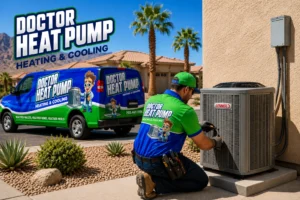
Tip #6: Keep Your Heat Pump’s Outdoor Unit Clear
Why It Matters: Restricted airflow forces your heat pump to work 15-25% harder, increasing energy consumption. Additionally, Las Vegas’s abundant landscaping debris can quickly obstruct units.
Weekly Maintenance (5 Minutes):
- Remove leaves, tumbleweeds, and debris within 3-foot radius
- Check for palm fronds leaning against unit
- Ensure no storage items blocking airflow
- Verify no plants have grown into clearance zone
- Clear dust from outdoor coil fins with gentle spray from garden hose
Seasonal Considerations:
- Fall: Falling leaves from deciduous trees
- Winter: Tumbleweeds and wind-blown debris
- Spring: Cottonwood seeds and pollen
Impact: This simple free winter energy saving tip maintains optimal efficiency and can save $30-60 per winter.
Tip #7: Ensure Indoor Vents Are Unobstructed
Common Mistakes: Las Vegas homeowners unknowingly block 40-60% of airflow by:
- Placing furniture directly over vents
- Covering vents with area rugs
- Stacking storage items near return grilles
- Closing too many vents in unused rooms
Optimization Checklist:
- Move furniture at least 6 inches from supply vents
- Ensure curtains don’t block vents
- Remove items stored near return air grilles
- Vacuum dust from vent covers monthly
- Adjust vent fins to direct air into room center
Why It Works: Proper airflow allows your heat pump to heat your home more efficiently, reducing runtime by 10-15%. This is one of the most impactful free winter energy saving tips requiring zero financial investment.
Tip #8: Switch Ceiling Fans to Reverse (Clockwise)
The Physics: Warm air rises and collects near ceilings—especially in Las Vegas homes with vaulted ceilings. Running ceiling fans clockwise at low speed pushes warm air down without creating a cooling breeze.
How to Implement:
- Locate reverse switch on fan motor housing (usually a small slide switch)
- Flip switch to change direction (clockwise when viewed from below)
- Run fan at lowest speed setting
- Verify you feel gentle upward air movement near fan
Rooms to Prioritize:
- Living rooms with high/vaulted ceilings
- Master bedrooms
- Great rooms with two-story ceilings
- Any room where heat pump vent is low and ceiling is high
Impact: This free winter energy saving tip can reduce heating costs by 10-15% in rooms with ceilings over 10 feet high by evening out temperature stratification.
Important: Run fans at lowest speed only. Higher speeds create cooling effect that counteracts benefits.
Free Winter Energy Saving Tips: Air Sealing Without Spending Money
Tip #9: Identify and Block Air Leaks with Household Items
The Statistics: The average Las Vegas home loses 20-30% of heated air through small gaps and cracks. However, many leaks can be temporarily sealed using items you already own.
DIY Air Leak Detection (Free Method):
- Wait for windy day (common in Las Vegas)
- Hold lit incense stick near suspected leak areas
- Watch for smoke movement indicating air infiltration
- Mark all leak locations with painter’s tape
Common Leak Locations in Vegas Homes:
- Base of exterior doors (especially sliding glass doors)
- Window frames (older homes especially)
- Electrical outlets on exterior walls
- Attic access hatches
- Recessed lighting fixtures
- Gaps around pipes entering home
Free Sealing Methods Using Household Items:
Door Gaps:
- Roll towels into “draft snakes” for door bottoms
- Use weather stripping you may already have in garage
- Hang heavy blankets over patio doors on cold nights
Window Leaks:
- Apply clear packing tape over small gaps temporarily
- Stuff gaps with old t-shirts or socks
- Cover entire window with plastic wrap and tape (removes easily)
Electrical Outlets:
- Stuff small gaps with tissue paper temporarily
- Place furniture against outlets on exterior walls
Attic Access:
- Place heavy boxes or books on hatch to compress seal
- Drape old blanket over hatch for additional insulation
Impact: These temporary free winter energy saving tips can reduce heating costs by 15-25% with zero financial investment.
Tip #10: Use Door Draft Stoppers in Strategic Locations
Making Free Draft Stoppers: You don’t need to buy anything—create effective draft stoppers from household items:
Method 1: Towel Roll
- Roll bath towel lengthwise tightly
- Place at base of exterior doors
- Secure with duct tape if it rolls away
Method 2: Sock/Fabric Tube
- Fill long socks or pant legs with rice, beans, or sand
- Tie ends closed
- Place against door bottoms
Method 3: Cardboard + Fabric
- Cut cardboard to door width
- Wrap in old t-shirt or pillowcase
- Wedge under door
Priority Locations:
- Front and back exterior doors
- Garage door into house
- Sliding glass patio doors
- Bedroom doors (if trying to zone heating)
Las Vegas Specific: Focus on north-facing doors where cold winds hit most directly. Additionally, patio doors often have larger gaps than standard doors.
Free Winter Energy Saving Tips: Humidity and Comfort
Tip #11: Use the Oven and Stovetop Strategically
The Opportunity: Cooking generates significant heat and humidity—both beneficial during Las Vegas winters. Additionally, this makes heating your home a natural byproduct of meal preparation.
Free Winter Energy Saving Tips for Cooking:
Oven Usage:
- Bake/roast during coldest parts of day (morning, evening)
- Leave oven door open after cooking to release heat
- Batch cook multiple items to maximize oven use
- Use oven rather than microwave when possible during winter
Stovetop Strategy:
- Boil water for tea, pasta, or vegetables without lids initially (releases humidity)
- Simmer soups and stews (adds moisture to dry Las Vegas air)
- Leave pots on warm burner after cooking to continue radiating heat
Kitchen Considerations:
- Open kitchen to living areas while cooking
- Run range hood on low (not high) to retain heat
- Close kitchen to rest of house after cooking to trap warmth
Dual Benefit: Las Vegas winter air is extremely dry (15-25% relative humidity). Adding moisture through cooking makes 68°F feel like 70-71°F, allowing further thermostat reduction.
Caution: Don’t use oven as primary heating source—this free winter energy saving tip supplements heating, not replaces it.
Tip #12: Strategic Shower Steam Distribution
The Concept: Hot showers generate substantial heat and humidity that typically escapes through exhaust fans. However, strategic bathroom fan management retains this warmth.
Implementation:
During Shower:
- Run bathroom fan on low or off (if air quality allows)
- Keep bathroom door closed to contain heat/steam
- Use hottest water temperature comfortable
After Shower:
- Leave bathroom door open 6-12 inches
- Turn off exhaust fan immediately
- Allow steam to drift into adjacent rooms
- Leave shower curtain/door open to release remaining moisture
Time Optimization: Schedule showers during coldest times (early morning, evening) when added heat and humidity provide maximum benefit.
Las Vegas Application: Our extremely dry winter air (often 15-20% relative humidity) makes this free winter energy saving tip particularly effective. Adding humidity makes lower temperatures feel more comfortable.
Free Winter Energy Saving Tips: Behavioral Changes
Tip #13: Dress Appropriately Indoors
The Reality Check: Wearing shorts and t-shirts indoors during winter, then heating your home to 75°F is expensive. However, these free winter energy saving tips include common-sense clothing adjustments.
Layering Strategy:
- Base layer: Long-sleeve shirt or light sweater
- Mid layer: Fleece or cardigan if needed
- Feet: Socks or slippers (30-40% of body heat escapes through bare feet)
Comfort at Lower Temperatures:
- 68°F feels perfectly comfortable with socks, long sleeves, and light sweater
- 66°F nighttime sleeping is ideal with proper bedding
- 64°F is acceptable with proper layering during waking hours
Psychological Adjustment: Most people adapt to slightly cooler indoor temps within 3-5 days. The discomfort is temporary, but savings are ongoing.
Tip #14: Use Blankets and Throws Strategically
The Economics: A fleece throw blanket costs $0 to use and eliminates need for 2-3°F higher thermostat setting (saving $40-70 per winter).
Strategic Placement:
- Keep throws on every frequently-used couch and chair
- Place blanket at foot of bed for easy nighttime access
- Store folded blanket near home office desk
- Keep one in family TV watching area
Nighttime Temperature Strategy: With proper bedding, you can comfortably sleep at 64-66°F:
- Use flannel sheets in winter months
- Add extra blanket or comforter layer
- Consider electric blanket (uses 100-200 watts vs. 3,000-5,000 watts for whole-house heating)
Impact: Lowering nighttime temps 4-5°F with better bedding saves 8-12% on heating costs—one of the most effective free winter energy saving tips.
Tip #15: Time Activities to Align with Temperature Needs
Strategic Scheduling: Plan energy-intensive activities during coldest times and quieter activities during warmer parts of day.
Daily Schedule Optimization:
Morning (Coldest – 5 AM to 9 AM):
- Take hot showers
- Use oven for breakfast baking
- Run dishwasher (generates heat)
- Do laundry (dryer heats home)
Midday (Warmest – 11 AM to 3 PM):
- Lower thermostat 2-3°F
- Open south-facing curtains for free solar heating
- Perform tasks requiring movement (cleaning, organizing)
- Complete outdoor errands
Evening (Cooling – 5 PM to 10 PM):
- Cook dinner using oven
- Close all window coverings at sunset
- Gather family in one room rather than spreading throughout house
- Raise thermostat slightly for comfort during stationary activities
Why It Works: By aligning your schedule with Las Vegas’s temperature patterns, you minimize heating needs during coldest times and maximize free solar gain during warmest hours.
Free Winter Energy Saving Tips: Smart Heat Pump Usage
Tip #16: Avoid Using Emergency/Auxiliary Heat
Critical Understanding: Your heat pump has two heating modes:
- Heat pump mode: Efficient, costs $0.15-0.25 per hour
- Emergency/auxiliary heat: Electric resistance strips, costs $0.75-$1.50 per hour (3-5x more expensive!)
How to Avoid Activating Auxiliary Heat:
- Never use “emergency heat” setting unless heat pump is actually broken
- Avoid large thermostat jumps (more than 3-4°F at once)
- Pre-program gradual temperature changes rather than sudden increases
- Be patient when raising temperature—give heat pump 30-45 minutes
Las Vegas Advantage: Our mild winters (rarely below 30°F) mean heat pumps operate efficiently in pure heat pump mode. Auxiliary heat should almost never activate unless you’re making programming mistakes.
How to Tell If Auxiliary Heat is Running:
- Thermostat displays “AUX” or “emergency heat”
- Vents blow noticeably hotter air
- House heats much faster than usual
- You hear different sound from indoor unit
Free Fix: If auxiliary heat runs frequently, adjust your thermostat programming to make smaller temperature changes (2°F max per adjustment). This simple change can cut heating costs by 40-60%.
Tip #17: Utilize Your Heat Pump’s “Auto” Fan Setting
The Difference:
“On” Setting:
- Fan runs continuously 24/7
- Uses 500-900 watts continuously
- Costs $40-75 per month extra
- Circulates air but doesn’t heat more efficiently
“Auto” Setting:
- Fan runs only when heating/cooling
- Reduces energy use by 40-50%
- Maintains comfort while saving money
- No real comfort disadvantage in Las Vegas dry climate
Why It’s One of the Best Free Winter Energy Saving Tips: Simply switching from “On” to “Auto” saves $30-60 per month with zero comfort sacrifice. Check your thermostat right now—this 10-second change starts saving immediately.
Exception: Homes with air quality concerns (allergies, pets, dust) may benefit from continuous fan operation. However, most Las Vegas homes do fine with “Auto” during winter.
Free Winter Energy Saving Tips: Maintenance You Can Do Yourself
Tip #18: Change Your Air Filter Monthly
Wait—Filters Cost Money! True, but if you have spare filters already purchased, using them correctly is free. Additionally, a clogged filter increases heating costs by 15-20%—far more than the filter replacement cost.
Las Vegas Filter Recommendations:
- Check monthly (desert dust accumulates quickly)
- Replace when visibly dirty or every 30-45 days
- Hold filter to light—if no light passes through, replace immediately
- Use MERV 8-11 for best efficiency/cost balance
The Math:
- Clogged filter penalty: $30-50 per month in wasted energy
- Filter cost: $3-8 each
- ROI: 400-1,000% return on investment
While not technically “free,” this is among the highest-return free winter energy saving tips if you already own filters.
Tip #19: Clean Your Heat Pump’s Outdoor Coil
Free Method:
- Turn heat pump off at breaker
- Remove loose debris by hand
- Gently spray coil with garden hose from inside out
- Allow to dry 30 minutes
- Turn breaker back on
Frequency for Las Vegas:
- Light cleaning: Monthly
- Thorough cleaning: Quarterly (after wind storms especially)
Impact: Dirty coils reduce efficiency by 20-30%. Regular cleaning maintains optimal performance without professional service costs.
Important: Use gentle water pressure only. High-pressure washers damage delicate coil fins.
Tracking Your Savings: Free Winter Energy Saving Tips Effectiveness
Create a Simple Tracking System
What to Monitor (All Free):
- Monthly kWh Usage – Compare to previous winter
- Monthly Energy Costs – Track actual bill amounts
- Thermostat Settings Used – Note any changes made
- Outdoor Temperature Averages – Use weather.com historical data
- Which Tips Implemented – Track what you’re actually doing
Simple Spreadsheet Format:
| Month | kWh Used | Cost | Avg Temp | Tips Used | Notes |
|---|---|---|---|---|---|
| Nov | 850 | $102 | 62°F | 1,2,4,6,9 | Started tracking |
| Dec | 920 | $115 | 58°F | All tips | Coldest month |
| Jan | 880 | $108 | 60°F | All tips | Savings visible |
| Feb | 810 | $98 | 64°F | All tips | Best results |
Expected Results: When implementing these free winter energy saving tips consistently, most Las Vegas homeowners see 15-25% reduction in winter heating costs within the first month.
FAQ: Free Winter Energy Saving Tips for Las Vegas
Do these free winter energy saving tips really work in Las Vegas’s climate?
Yes—in fact, these free winter energy saving tips are especially effective in Las Vegas due to our unique desert climate. Our abundant sunshine provides free solar heat gain through windows, our low humidity means lower temperatures feel more comfortable, and our mild winters (rarely below 30°F) allow heat pumps to operate efficiently without auxiliary heat. Additionally, Las Vegas’s 300+ sunny days annually mean solar heat gain strategies work almost daily. Most homeowners implementing these free winter energy saving tips see 15-25% heating cost reductions.
How much money can I actually save with free winter energy saving tips?
Savings depend on home size and current habits, but realistic expectations include: lowering thermostat 2-3°F saves 6-9% ($15-35/month), strategic window covering usage saves 5-10% ($10-25/month), proper air sealing saves 10-15% ($20-45/month), and avoiding auxiliary heat saves 20-40% on heat pump operating costs. Combined, these free winter energy saving tips typically reduce total winter heating costs by $60-$150 for an average 2,000 sq ft Las Vegas home—with zero financial investment required.
Which free winter energy saving tips provide the biggest impact?
The three highest-impact free winter energy saving tips are: (1) lowering your thermostat by 2-3°F saves 6-9% immediately, (2) avoiding auxiliary/emergency heat on your heat pump can cut heating costs by 40-60%, and (3) strategic solar heat gain through south-facing windows provides 5,000-10,000 BTUs of free heating daily. Additionally, switching your ceiling fans to reverse and ensuring proper heat pump airflow each deliver 10-15% savings. Focus on these five tips first for maximum results.
Can I combine free winter energy saving tips with paid efficiency upgrades?
Absolutely! These free winter energy saving tips provide immediate savings while you plan for larger investments like new heat pump installation, improved insulation, or window upgrades. Additionally, implementing free strategies first helps establish baseline energy usage, making it easier to measure ROI from paid upgrades later. Many Las Vegas homeowners use savings from free winter energy saving tips to fund future efficiency improvements.
How long does it take to see results from free winter energy saving tips?
Most free winter energy saving tips deliver immediate results visible on your next utility bill (15-30 days). Temperature reduction strategies start saving the moment you adjust your thermostat, solar heat gain provides instant warming on sunny days, and avoiding auxiliary heat reduces costs immediately. However, behavioral changes like cooking schedules and clothing adjustments may require 1-2 billing cycles to show full impact as you establish new habits and optimize your approach.
Conclusion: Start Saving Today with Free Winter Energy Saving Tips
Implementing these free winter energy saving tips requires no financial investment—only commitment to simple behavioral changes and strategic system usage. Additionally, these no-cost strategies can reduce your Las Vegas winter heating bills by 15-30%, saving the average homeowner $60-$150 per winter without spending a single dollar on equipment or services. Furthermore, many of these free winter energy saving tips become automatic habits within 2-3 weeks, delivering ongoing savings year after year.
The beauty of these free winter energy saving tips is that they work for every Las Vegas homeowner, regardless of home age, size, or current HVAC system. Moreover, implementing even 5-7 of these strategies delivers measurable results, and combining multiple tips creates compounding benefits that maximize your savings potential. The free winter energy saving tips outlined here leverage Las Vegas’s unique climate advantages—abundant sunshine, low humidity, and mild winters—to reduce heating costs without sacrificing comfort.
Ready to optimize your heat pump system for maximum winter efficiency? While these free winter energy saving tips deliver immediate results, Doctor Heat Pump can help you identify additional opportunities for long-term savings through professional system tune-ups and efficiency assessments. Our Las Vegas heating experts understand desert climate challenges and can provide personalized recommendations that build on these free winter energy saving tips. Call now at 702-467-7236 to schedule your consultation and discover how to maximize your home’s heating efficiency. Learn more about heat pump operating costs and start your journey to lower winter energy bills today!
References
- U.S. Department of Energy – Winter Energy Saving Tips: https://www.energy.gov/energysaver/fall-and-winter-energy-saving-tips
- National Weather Service – Las Vegas Climate Data: https://www.weather.gov/